The Syrian Wars and the Forgotten Beasts
Having recently examined the Punic Wars between Rome and Carthage—where Hannibal famously led his war elephants across the Alps—this week our Holistic History group turned our focus from the western Mediterranean to the east. There, an equally massive, elephant-heavy struggle was unfolding at the exact same time.
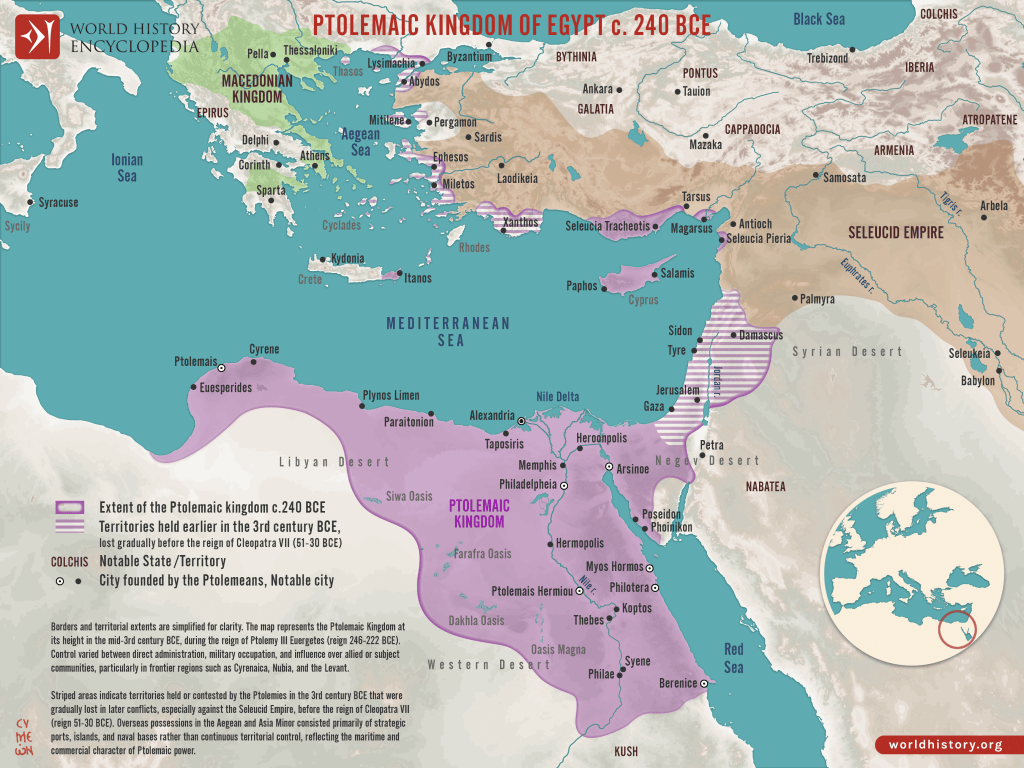
When Alexander the Great died unexpectedly in 323 BC without an heir, his top generals—known to history as the Diadochi (the “Successors”)—carved up his empire into rival warlord dynasties. Two powerful families dominated:
- The Seleucid Empire (ruling Syria and Mesopotamia)
- The Ptolemaic Kingdom (ruling Egypt)
For over a century (274–168 BC), these Hellenistic kingdoms fought six bitter Syrian Wars over the Levant—the coastal corridor encompassing modern Syria, Lebanon, Jordan, Israel, and Palestine.
Right in the middle of the conflict sat ancient cities like Jerusalem, Gaza, Tyre, and Sidon. For ordinary families living along these trade routes, a hundred years of marching infantry phalanxes brought endless ruined crops, destroyed homes, and heavy taxation as two foreign royal dynasties treated their homeland like a giant chessboard.
A Tale of Two Elephants 🐘 Ancient warfare was surprisingly global, as seen in the Fourth Syrian War at the Battle of Raphia (217 BC)—a colossal clash involving over 140,000 soldiers and 173 war elephants:
- The Seleucid Advantage: King Seleucus I had earlier traded eastern territories to the Mauryan Empire of India in exchange for 500 massive Asian war elephants.
- The Ptolemaic Dilemma: Blocked from accessing India, King Ptolemy IV set up hunting posts along the Red Sea to capture wild African elephants in what is now Eritrea.
The Ecological Twist: Historians long believed Ptolemy used African forest elephants (Loxodonta cyclotis), which are naturally smaller. However, recent DNA tests show they were actually African savanna elephants. Because they lived in a small, isolated pocket, they suffered from severe inbreeding, leaving them unusually small and easily spooked. When the armies met at Raphia, Ptolemy’s nervous elephants panicked and ran away from the larger Indian giants! (Fortunately for Egypt, their foot soldiers in the phalanx managed to win the day anyway).
A Joined-Up Geography side thought: Today, Africa’s remaining elephant herds face similar threats from habitat loss and fragmentation, cutting off wild groups from each other and leaving them dangerously vulnerable to genetic bottlenecks.
The Circle in the Sand ⭕
A century of constant fighting left both Diadochi empires completely exhausted.
In 168 BC, during the Sixth Syrian War, as the Seleucid king Antiochus IV prepared to invade Egypt, a Roman envoy stepped forward. Using his walking stick, he drew a line in the dirt around the king. He ordered Antiochus to pledge peace before stepping out of that circle—or face war with Rome. Terrified of Rome’s growing strength, the king turned his army around.
The story of Alexander’s successors didn’t end with a grand victory, but with two worn-out empires bowing to the rise of Rome.


Leave a Reply